

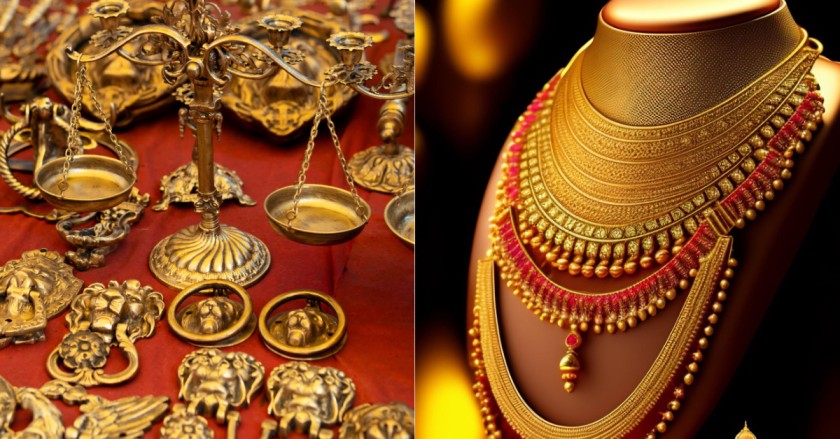
Gold has captivated the imagination of India for millennia. Beyond its lustrous beauty, gold has played an integral role in the nation’s history, culture, and economy. In this article, we embark on a journey to trace the evolution of gold prices in India. We’ll follow the trail from ancient times to the contemporary era, highlighting the remarkable evolution and continued relevance of gold prices. While we won’t delve into investment strategies, we’ll explore the rich tapestry of gold’s journey through time and its significance in the ongoing Gold Price Trend.
Ancient India: The Gilded Beginnings
In ancient India, gold was a symbol of riches and royalty. Its allure stretched from the Indus Valley Civilization to the powerful Mauryan Empire. Gold was used for trade, as a form of currency, and as a status symbol. The legacy of magnificent gold jewelry and coins from these eras remains a testament to its historical importance.
The Mughal Era: A Glittering Age
The Mughal dynasty brought an age of opulence and grandeur to India, further enhancing the connection between India and gold. The legendary Koh-i-Noor diamond, a part of the Mughal treasury, is an embodiment of the era’s fascination with gold.
Colonial Influence: The East India Company and Gold Prices
The British East India Company significantly altered the dynamics of India’s gold market. Its influence on trade and currency systems impacted the trajectory of gold prices. The regular export of gold to Europe through the British also had implications for gold prices in India.
Post-Independence: A New Chapter
India’s independence in 1947 marked a significant turning point for gold. The Indian government implemented policies that regulated gold imports and ownership, changing the dynamics of the gold market.
Gold Price Trends in Modern India
Today, gold prices in India are influenced by a multitude of factors, both local and global. The economic growth of the nation, inflation, exchange rates, and consumer demand all play a role. Understanding these factors is crucial for grasping the current Gold Price Trend in contemporary India.
Cultural Significance: Gold in India’s Heart
Gold is not just a commodity; it is a symbol of tradition, culture, and social significance in India. Used in religious ceremonies, festivals, and weddings, gold transcends its monetary value. Families pass down gold ornaments through generations, showcasing the sentimental and cultural value that spans generations.
Conclusion
The story of gold prices in India is not just a tale of economic figures and market fluctuations; it is a narrative of tradition, culture, and society. While it’s not about investments, understanding the journey of gold prices, from antiquity to modernity, is crucial for grasping its continued relevance. As gold remains more than just a precious metal in India, its historical journey endures as a valuable source of insight into the nation’s cultural and economic evolution. Whether in ancient times or the contemporary era, the legacy of gold remains intertwined with the heart of India.


