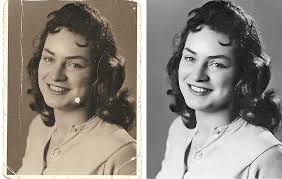
Every photo holds a story, preserved within the confines of its frame—a frozen moment from the past, echoing the essence of a time gone by. Yet, as the years roll on, these tangible pieces of history often fade, fray, and deteriorate. Enter the era of AI old photo restoration: a technological marvel shaking up how we preserve and celebrate historical visuals. Harness the power of AI, and we can breathe new life into the fragments of the past, making it easy, effective, and extraordinarily profound.
The Renaissance of Memory Through AI
Historical photos serve as the visual archives of personal and collective memories, but their vulnerability to the ravages of time can make their stories short-lived. Traditionally, restoring these photos required meticulous effort by skilled conservators, a resource-intensive process involving countless hours. But now, old photo restoration AI changes the game. This innovative technology offers the ability to automatically fix scratches, repair damages, and even colorize aged black-and-white images with just a click. Importantly, this process respects the photo’s authenticity while ensuring that no additional damage is done to the original.
A Seamless Integration of Technology and Art
AI old photo restoration does not just repair; it revitalizes. It utilizes complex algorithms to interpret and recreate lost elements of images, making educated guesses about textures, colors, and patterns. What might seem like simple tasks are underpinned by deep learning and neural networks, the core components that allow AI to make such precise alterations to faded or damaged photographs.
One of the most striking features of this technology is its accessibility. The requirement for technical know-how is minimal, making it possible for anyone with historical photos to take part in the restoration process. This democratization of photo restoration means that more families and cultural institutions can preserve their legacies and share them with the world without the risk of damaging the original artifacts.
The Impact on Cultural Preservation
The implications of AI in the realm of photo restoration are profound. Cultural institutions, such as museums and archives, hold vast collections of deteriorating photographs that are vital to understanding societal histories and narratives. With old photo restoration AI, these institutions can tackle large-scale restoration projects more efficiently, ensuring that valuable historical records are more accessible to the public and researchers. This technology also opens up possibilities for more dynamic exhibitions, where restored and vibrant images can tell richer stories of days past.
Educational Enhancements and Personal Rediscoveries
For educational purposes, AI-enhanced images can transform the way students and the public engage with history. Seeing vibrant, restored photographs can make historical events and figures more relatable and tangible, providing a clearer window into the world that once was.
On a personal level, individuals using AI to restore family photos can reconnect with their heritage. A visually refreshed photograph can reignite memories and stories, acting as a bridge between generations and a prompt for family bonding and sharing oral histories.
For further reading on the underlying technologies of AI, this Wikipedia page offers extensive information: https://en.wikipedia.org/wiki/Artificial_intelligence.
Bringing the Past Into the Future
AI is artfully merging technology with tradition, allowing us to hold onto and even deepen our connection with history. Through old photo restoration AI, not only are we able to correct blemishes or fading, but we’re also unlocking memories, sustaining legacies, and enriching our understanding of the past. As AI continues to evolve, its role in historical preservation will undoubtedly expand, promising even greater insights and capabilities. Through these technological advances, the past is not only recaptured; it’s revitalized, offering each of us a clearer view into the lives and times that precede us.