

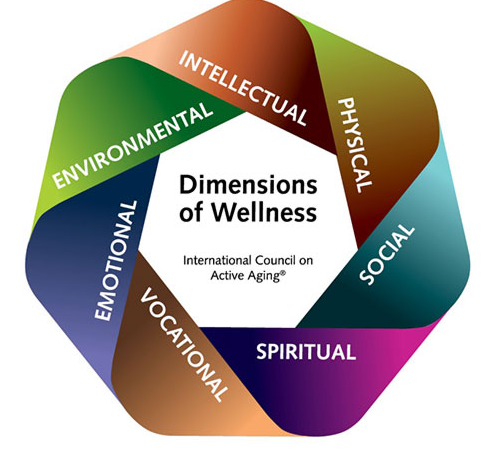
What is “wellness” itself? There are many definitions and 20 years ago well-being did not exist. But today the industry is growing rapidly and the term “wellness” is overused, misused, and misused in context. Wellness is reaching your full potential; it is an autonomous and constantly evolving process. Well-being has seven dimensions: occupational, spiritual, intellectual, emotional, environmental, and physical. When all these dimensions are met, we are considered complete or complete. Wellness is more than products to make us feel good or be in good physical shape.
Here’s what are the 7 dimensions of wellness and what each of the seven dimensions means:
1. Social welfare. In this way, a person contributes to their environment and community and builds better living spaces and social networks. The social dimension encourages contributing to one’s own environment and community.
2. Professional well-being. Professional development relates to one’s attitude toward work and recognizes personal satisfaction and enrichment in life through work. Career choice, job satisfaction, career ambitions, and personal achievements are important parts of this dimension. To be professionally good, a person ends up doing exactly what he wants to do in life and is comfortable with his future plans.
3. Spiritual wellness. The spiritual dimension recognizes our search for meaning and purpose in human existence. It does not mean that one is religious, but that it is better to think about the meaning of life and be tolerant of the beliefs of others than to close the mind and become intolerant. Mentally healthy people take the time to grow and learn spiritually. They have a clear sense of right and wrong and act accordingly.
4. Intellectual well-being. This dimension recognizes one’s creative and stimulating mental activities and expands knowledge and skills while sharing one’s gifts with others. The intellectually prosperous is open to new ideas, thinks critically, and seeks out new challenges. These people will challenge and challenge their minds with intellectual and creative pursuits instead of becoming cocky and unproductive.
5. Emotional well-being: Emotional well-being. This dimension encompasses the ability to cope with feelings and related behaviors, including the realistic assessment of one’s limitations, the development of autonomy, and the ability to deal with stress effectively. Emotionally good people have the ability to express their feelings freely and deal with them effectively. They are also aware of and accept a wide range of feelings in themselves and in others.
6. Environmental well-being. This includes the ability to promote health measures that improve living standards and quality of life in the community, including laws and agencies that protect the physical environment. The environmentally conscious person is aware of the earth’s natural resources, saves energy, buys organic food and products, and enjoys and appreciates spending time in a natural environment.
7. Physical well-being. This is what we are all good at in our health clubs. It is achieved by combining good exercise and eating habits, taking precautions for self-care and receiving appropriate health exams throughout our lives. It also means taking personal responsibility and caring for minor illnesses and knowing when professional medical care is needed. Physically good people understand and appreciate the relationship between healthy foods and their body’s performance. The physical benefits of looking and feeling good generally lead to the psychological benefits of increased self-esteem, self-control, determination, and a sense of direction. Integrating wellness into your facilities
What do you do in your programming to promote wellness? You must first decide what wellness means at your institution. Does your facility have spa facilities, dietitians, corporate wellness programs, physical therapists / chiropractors, or a recycling program? Wellness today is more than going to the gym to exercise. It means getting a sports massage, attending a health seminar, or seeking the expertise of a registered dietitian. Helps member relieve stress and educate about health in ways other than physical fitness.
The wellness industry is predicted to be the next trillion dollar industry, and over the next 10 years, an additional trillion dollars from the U.S. economy will be devoted to keeping Americans healthy through health. programming and comprehensive treatment.


