

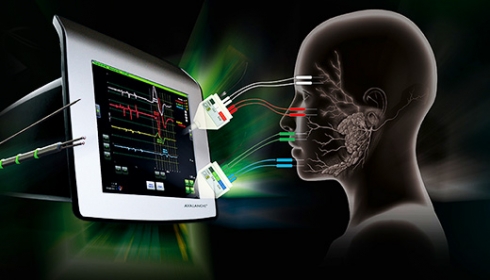
The major driving factors for the intraoperative neuromonitoring (IONM) market are the rising chronic disease prevalence, geriatric population, and application of IONM during surgeries. In 2023, the market is projected to grow to $5.4 billion, at a 7.2% CAGR during the forecast period (2017–2023). IONM refers to the tracking of the functioning of the peripheral and central nervous systems of patients undergoing surgeries, by measuring the electrical signal transmission in the spinal column, eloquent cortexes, and peripheral nerves, to reduce the chances of surgical complications and improve the patient outcome.
Outsourced and insourced are the two bifurcations under the source type segment of the IONM market, of which the insourced bifurcation led it in 2016, with a 60.0% share. However, during the forecast period, the outsourced bifurcation is predicted to observe faster growth and generate the higher revenue in 2023. This is attributed to the increasing focus of hospitals on reducing their operational expenditure, by outsourcing IONM to third-party firms, rather than hiring and training technicians themselves.
Request to Get the Sample Pages at: https://www.psmarketresearch.com/market-analysis/intraoperative-neuromonitoring-market/report-sample
Among the major IONM market drivers is the increasing application of the technique in surgeries. As several vascular, ear, nose, and throat (ENT), and orthopedic surgeries involve dealing with the neural network, the use of IONM is expanding beyond the traditional brain and spinal operative procedures. According to the World Health Organization (WHO), the number of surgeries performed globally rose by 38% from 2004, to reach roughly 359.5 million in 2012, with the sharper surge seen in developing nations, compared to developed countries.
It is because of such reasons that North America held the dominating share, of 43.9%, in the market in 2016 and is predicted to maintain its lead during the forecast period. Other reasons behind this are the increasing incidence of neurological issues, patient awareness about IONM, and number of surgeries, favorable reimbursement framework, sophisticated healthcare infrastructure, and large number of hospitals. The fastest market growth, however, is projected to be witnessed in Asia-Pacific (APAC).
Thus, the market for intraoperative neuromonitoring will continue to prosper, with the rising number of chronic disease patients, expanding application of IONM, and increasing volume of operations.


