In recent years, Learning Management Systems (LMS) have emerged as indispensable tools in the realm of education, transforming the traditional learning landscape. eTutor LMS For Schools is a comprehensive platform that allows educators to organize, deliver, and track learning experiences.
The growing importance of LMS in education can be attributed to several key factors.
1. Accessibility and Flexibility
2. Enhanced Collaboration
3. Data-Driven Decision-Making
Challenges and Opportunities in LMS Implementation:
Implementation Challenges:
1. Resistance to Change:
Some educators may resist the shift from traditional teaching methods to an LMS-driven approach.
2. Technical Barriers:
Schools may face challenges related to infrastructure, technical expertise, and resource constraints.
Opportunities in LMS Implementation:
1. Global Learning Reach:
LMS breaks down geographical barriers, enabling institutions to reach a broader and more diverse audience.
2. Adaptive Learning:
LMS platforms often incorporate adaptive learning technologies, personalizing content to each student’s pace and learning style.
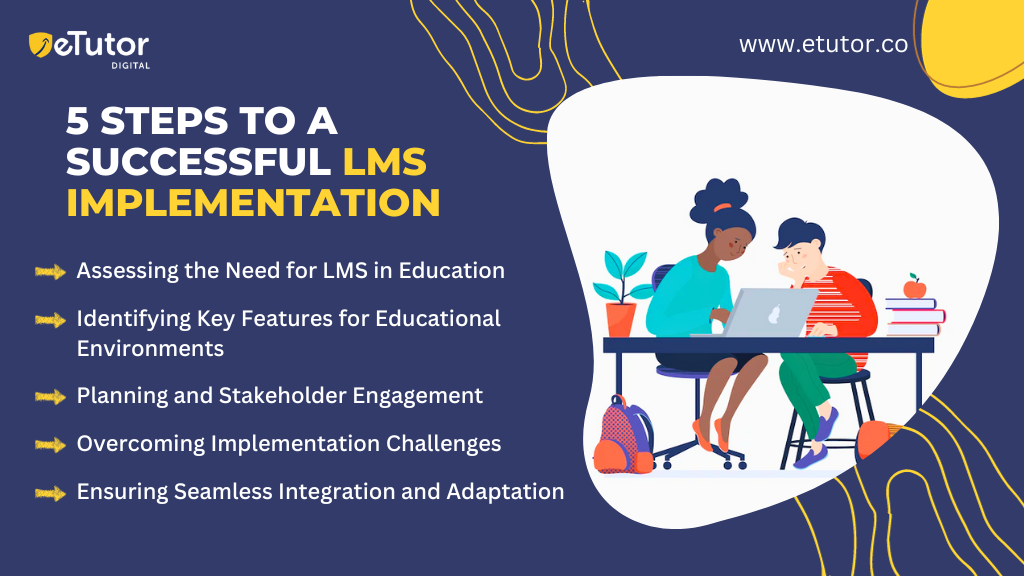
5 Steps to a Successful LMS Implementation:
Below are the 5 crucial steps required in successful implementation of LMS. They are:
1. Assessing the Need for LMS in Education:
The imperative for adopting Learning Management Software (LMS) in education is underscored by the dynamic landscape of contemporary learning. As education undergoes a profound digital transformation, the traditional classroom model faces challenges related to diverse learning styles, the demand for flexible and accessible learning, and the necessity for effective data management. These challenges, intrinsic to modern educational settings, necessitate a strategic evaluation of LMS implementation.
LMS for Schools serves as a comprehensive solution to the identified needs, offering a centralized platform that streamlines content delivery, assignment management, and communication channels between educators and students. Its adaptability enables personalized learning experiences, accommodating the unique preferences and progress of individual learners. Moreover, LMS facilitates the transition to remote learning, transcending geographical constraints and fostering accessibility, flexibility, and inclusivity in education.
A critical facet of assessing the need for LMS is its capacity for robust data analytics. By capturing and analyzing student performance and engagement data, LMS empowers educators with insights to make informed decisions, refine instructional approaches, and optimize the overall learning experience. In essence, the adoption of LMS for Education aligns with the evolving requirements of a technologically driven world, offering a transformative solution that not only addresses current challenges but also paves the way for a more dynamic and data-informed educational future.
2. Identifying Key Features for Educational Environments
In the pursuit of enhancing educational experiences, the identification of key features for educational environments is paramount. A user-friendly interface stands as a cornerstone, ensuring both students and educators can navigate seamlessly through the platform, accessing resources, assignments, and communication tools effortlessly. Robust content management capabilities allow educators to create and share dynamic learning materials, incorporating diverse multimedia elements.
Collaborative tools, such as real-time discussion forums and video conferencing integration, foster interaction among students, facilitating engagement and group projects. The inclusion of versatile assessment tools, immediate feedback mechanisms, and adaptive learning technologies accommodates diverse learning styles and provides personalized learning paths. Analytics and reporting features empower educators with valuable insights into student performance and engagement, enabling informed decision-making. Integration capabilities with Learning Management Systems and other educational tools create a cohesive digital learning ecosystem.
Accessibility features and compliance with security and privacy standards ensure inclusivity and safeguard sensitive data. Moreover, a commitment to ongoing support through comprehensive training resources and responsive customer support ensures that educators can maximize the potential of these features. In summary, the identification of key features for educational environments revolves around creating a technologically advanced, user-centric platform that not only addresses current educational needs but also adapts to the evolving landscape of learning.
3. Planning and Stakeholder Engagement
Successful project execution hinges on meticulous planning and robust stakeholder engagement. In the planning phase, the establishment of clear objectives, a realistic timeline, and resource allocation forms the foundation of the project roadmap. Identifying potential risks and formulating mitigation strategies ensures adaptability and resilience in the face of challenges. This strategic planning process lays the groundwork for the project’s success. Simultaneously, effective stakeholder engagement is imperative for project alignment and success.
Identifying and understanding the diverse needs of stakeholders both internal and external enables tailored communication and engagement strategies. A well-defined communication plan, incorporating regular updates and feedback mechanisms, ensures that stakeholders are informed and engaged throughout the project lifecycle. The adaptability to incorporate stakeholder feedback and an openness to revisiting the plan contribute to a collaborative and responsive project environment. In essence, the synergy of meticulous planning and stakeholder engagement not only drives successful project outcomes but also cultivates a sense of shared ownership and satisfaction among all involved parties.
4. Overcoming Implementation Challenges
Implementing Learning Management Systems (LMS) in education can face challenges like resistance to change, technical issues, and resource constraints. To overcome resistance, involve educators in decision-making, offer thorough training, and emphasize the benefits of LMS. Address technical complexities by planning meticulously, seeking IT expertise, and choosing an LMS compatible with existing systems.
Manage resource limitations by prioritizing essentials and adopting a phased implementation approach. Successful LMS integration requires adaptability, personalized usage by educators, and responsive solutions to challenges as they arise.
5.Ensuring Seamless Integration and Adaptation
Seamless integration and adaptation of Learning Management Systems (LMS) in educational settings are key to their success. Firstly, ensure that the chosen LMS aligns with existing systems, making it easier for educators and students to transition. Provide comprehensive training to help users navigate the platform effortlessly. Adaptation involves encouraging educators to explore and personalize the LMS according to their teaching styles. Foster a collaborative environment by addressing any concerns promptly and seeking feedback for continuous improvement.
Regular check-ins and support mechanisms contribute to a smoother adaptation process. Lastly, ensure ongoing adaptability by staying informed about updates and new features of the LMS. This allows institutions to harness the full potential of the system and adapt it to evolving educational needs. In essence, a user-friendly approach, personalized training, and ongoing support are essential for the seamless integration and adaptation of LMS in educational environments.
Conclusion:
In conclusion, embracing a digital future in education through a Learning Management System (LMS) holds the key to transforming traditional learning paradigms. eTutor can help you for providing top Learning Management System for Schools, to know more details visit the website. The integration of digital tools not only enhances the efficiency of educational processes but also opens up avenues for personalized and collaborative learning experiences. As we navigate the dynamic landscape of technology in education, it is essential to prioritize continuous professional development, cybersecurity, and user feedback.
By fostering a culture of innovation and adaptability, educational institutions can leverage the full potential of their LMS, creating an environment where students and educators alike thrive in the opportunities presented by the digital age. In the ever-evolving realm of education technology, the journey towards a digital future requires a commitment to refining strategies based on data-driven insights and user experiences. As educational institutions strive for excellence, the successful implementation of an LMS becomes not just a technological upgrade but a transformative catalyst for student success and lifelong learning. Through thoughtful integration, robust support systems, and a commitment to staying at the forefront of technological advancements, the digital future in education becomes an exciting and promising frontier for educators, learners, and institutions alike